

Thank you to everyone who donated. I’ve had a few calls with readers and a Kvetch request. We raised at least several thousand dollars for the Levitan family. Thank you Gabriel Wittenberg, Caspar Roxburgh, Jason McPherson, James Booth, George Georgiadis, OY, Ancient Problemz, and others who asked to remain anonymous. You can still donate here.
I’m finishing up a few weeks in Mexico. I’ve been visiting Mexico for 20 years, and more often for the last 10 years since I married a Mexican. I’ve mainly driven around Yucatan and Quintana Roo and visited Mexico City and Queretaro, plus other tidbits. That’s a pretty narrow aperture given how big and diverse Mexico is. So the below observations are limited accordingly.
Mexico is culturally, economically, and ethnically hierarchical. This has deep cultural roots going back to both native and Spanish social structures.
You would expect low socio-economic mobility given the high stratification. And there is — class is super sticky. But new-ish immigrant groups have done very well over the last century, such as the Lebanese and Jewish communities. (I am a Maronite appreciator.) What does that say about the opportunity available in such a society?
To answer my own question, perhaps Mexico rewards tight in-group capital (family, trust, ethnic networks) more than abstract merit. Diaspora ethnic groups succeeded because they arrived with merchant traditions, internal credit, intra-marriage, and distance from indigenous caste logic.
(Bit tangential but ‘distance from indigenous caste logic’ is underrated in other ways. You can ‘arb’ status cross-culturally, ie. find a mate that would be out of your league in your own country offshore, because your status is illegible to him/her in theirs. For example, I know a few upper class Mexicans that married Joe Blow Aussies, but would have never dreamed of doing that in Mexico. I have also seen the other way — a strapping Aussie lad finds a Mexican or Asian girl that would be of middling social status in her home country, but is fine for Australia where such things are illegible. It’s a bit funny in the case of (white) upper-class Mexicans, who implicitly misread all Aussies as ‘upper class’ based on ethnicity. This applies to many cross-cultural matches.)
It’s very difficult to make good money as an employee. Equity is ~the only path to wealth. The opportunity to build businesses is real. A Spanish woman who started a business in Mexico City told me it’s much easier than in Europe.
I suspect the market is big enough and the general chaos high enough that you can just do things.
I used to really love Mexico’s high chaos / high agency mix. You can basically do whatever you want. This trip more than ever I’ve just noticed the general dysfunction. It’s always been there, but it’s less ‘third world chic’ and more ‘just sucks’ to me now. This probably maps to my own life arc from young single man (risk-seeking) to early-middle age dad (more risk averse). The ability of a state to maintain public goods and social order is surprisingly hard and probably path dependent on a bunch of things. Probably broad-based state capacity is a foundational thing, hard to retrofit onto broken incentives. Once a society normalises private provision of order, it’s incredibly hard to claw back. You need a broadly vested elite, upfront. Which is extremely difficult (impossible?) in an ethno-classist state like Mexico (and South Africa).
I always think of South Africa here. South Africa is a more extreme Mexico: more crime, more dysfunction, less opportunity, similar broad ethno-class divides. The Mexican elites were smart enough to not implement legal apartheid. That said, if I had to choose, I’d live in Cape Town over Mexico City. Although Cape Town is probably declining in a way Mexico City is not. Probably unsurprising given I love Sydney, and Cape Town is Sydney’s forsaken cousin.
Other Mexico / South Africa common-isms — the guys who wave you in and out of parking spots for a tip. And the Mexican call for a waiter is joven — ie. young man. In France this is not condescending (garçon). In Mexico it feels between garçon and boy, as once used in South Africa. A bit jarring for an Aussie, I just say amigo. I cannot call a 50yo server joven. (Although native women at a shop counter will call me joven, so it’s not as racially or class-tinged as I first assumed.)
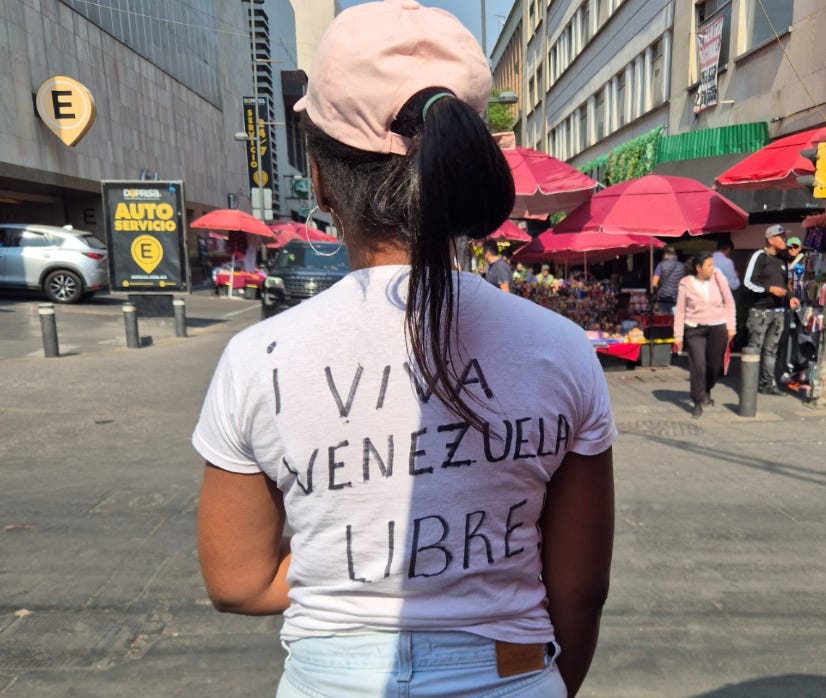
Public goods like roads and cleanliness and security are poorly maintained. The rich privately maintain such goods, living behind endless fortifications.
Even the middle class can afford household staff and live within gated communities (depending on city).
There are different tiers of household staff. There is “generational, live-in, part of the family” staff and there’s “miserable, comes by daily, replaceable” staff.
Cheap-ish help means there is childcare available everywhere — in shopping centres, restaurants. I wonder if this has any appreciable impact on fertility rates? Same with no rules around car seats.
The single greatest test for state capacity is drinking water on tap. It requires boring competence and coordination across decades. Mexico’s bottled water industry is enormous — #1 per capita in the world. Try building a new system around that. It’s another example of public goods outsourced to private individuals (bottled water over a public water system). Beyond a bare financial comparison, abundant potable water is a paean to state capacity, a symbol of functionality and order — like houses of worship.
After tap water, probably a sewerage system that can handle toilet paper. (PS. ATM fees here are egregious.)
I enjoy the (often racially tinged) Mexican cat calling for my kids. Guerito. Gallo. My 1.5yo does indeed look like a strutting rooster. And is very fair.
It goes without saying these nicknames are a one-way street.
Flaco and gordito are other charming Latin American-isms.
I enjoy Mexico’s very deep machismo.
Mexico is covered in amazing and under-visited natural sites and pre-colonial era ruins. It helps to have a local guide. Local guides love the movie Apocalypto by Mel Gibson.
There are two parallel economies — one for the rich and one for the poor. The one for the rich is at least as expensive as Australia.
Pricing can be lopsided. A$10/hr for a nanny on NYE, A$30 per tequila shot at a hot nightclub.
Prices overall way up over last few years. US even more so, so may be an Australian dollar / economy thing? Is it good or bad for Australia that Australia seems less expensive relative to these countries? Feels bearish. Adios, First World Premium? Convergence of global capital?
For kids, Kidzania in Mexico City is a bizarro theme park (?) where they get to play as different kinds of workers: Amazon warehouse workers, car rental assistants, radio presenters, pharma manufacturers, and so on. Branded! I can only hope and presume that the brands (e.g. Amazon) actually sponsor the place. Totally bizarre. Kids like it. The Aztlán Parque Urbano in Chapultepec is a great theme park. Better rides, easier queues, more affordable than anything I’ve been to in Australia. Miniature shopping centres with little trolleys for kids to push around and collect plastic foodstuffs are another popular type of kids play centre across Mexican cities.
Mexico is covered with US fast food franchises in a way Australia is not. I’d be super interested in their unit economics. Prices seem similar. Cheaper labour, cheaper real estate, similar revenue? Or something else?
Rich Mexicans love TVs. Throughout their homes and restaurants.
Mexico City is not a morning city. No city is a morning city like Sydney is a morning city.
Every meaningful restaurant and nightclub in Mexico has to pay off the regional cartel.
It matters whether you are stopped by state police, federal police, or the army.
Queretaro has a nice and large old town (that looks exactly the same as other colonial town squares) but is otherwise an awful looking city: a jagged concrete jungle. It’s growing and its mass middle class housing developments rival Soviet khrushchyovkas in their ugliness.
There is no such thing as urban design in Mexican cities, beyond the old planned Spanish city centres. If this is YIMBY paradise — count me out! But maybe would look different with 4x the GDP per capita?
There seems to be a pretty big corruption industry called factureras. Invoices from fake companies are manufactured and sold for two purposes: money laundering and avoiding taxes. Ironically, the former is to pay tax. ChatGPT tells me this accounts for 1 – 2% of Mexican GDP. It’s an entire industry of corrupt officials, fake invoice vendors, and real company customers that arises from a quirk of Mexico’s tax system. Probably another example in favour of equity over employment.
In Mexico City they built a giant tower, Estela de Luz, that would light up for the bicentenary. It was 2 years late (missed the bicentenary), 3x over budget, and doesn’t work. It’s now a giant monument to corruption.
I’ve seen a few cyclists in Mexico City. Looks like suicide.
There are a few cycling paths around now. Feels like cargo cult modernity. Like recycling. I’ve been to at least one Mexican household where they separate recycling — and there is no recycling collection. It’s pure psycho-modernity. At least in Australia we have an entire national system of recycling that’s collected. It serves zero purpose, but is sufficiently abstracted from the household that the householder can pretend.
The meteoric rise of the Chinese auto industry titan is presumably catastrophic for Mexico’s large car manufacturing industry. There are Chinese cars everywhere here already.
Australia feels on the fringes of empire, Mexico feels at its feet. I’m sure this is no news to Mexico watchers, but the US treasury blew up a large Mexican bank last year by accusing it of money laundering. I’d love to know the real story, which seems entirely political. Ie. why this bank, why now.
Mexicans really like Mexican music, and especially their mega pop stars. Sure there is plenty of American music around. But there is a popular, cross-class and unironic appreciation for Mexican megastars like Luis Miguel, Alejandro Fernández, Thalía, Juan Gabriel. Many (most?) of the megastars are from Mexico’s white upper crust. They are very clearly ‘national culture’ coded. The US has this in spades obviously — it’s the water we all swim in. Thailand and Russia clearly have versions of this. Australia doesn’t really? I don’t mean Australian musicians — AC/DC, INXS, Nick Cave, etc. They are great but aren’t Australiana in the same way. Maybe John Farnham is a kind of equivalent for Australia, where people might sing along to it in bars. But his hit song You’re The Voice has around 250m listens on Spotify. Mexico has a kaleidoscope of equivalents with 500m - 1bn views for their top hits (I’ve been into this track). Such music is considered kitsch or dated in Australia. A lot of the Mexican stuff fills stadiums and is really very charismatic. It reflects Mexico’s broader operatic culture — everything tends to be grandiose, a telenovela writ large. I am a Mexican music enjoyer!
Socialist flirtation runs deep — going back to hosting Trotsky, sympathies with Bolivar, anarchist graffiti, etc — but feels like a hangover from the last century rather than anything serious. Like how there are still social distancing signs around from the COVID era.
When I first came to Mexico in 2007, there were a lot of redundant roles e.g. handing out paper towels in bathrooms for a tip. There is still abundant make-work, but seems far less over 20 years.
There is very low general social trust. Don’t leave kids alone. Assume drivers will be unsafe. And so on.
Mexicans really love flan. And Maggi sauce.
Raw chickens in Mexico are yellow because of their feed (!).

Cancun is hurricane-proof. E.g. powerlines are below ground. I suspect because it’s a new creation. Not sure how it is in Queensland, which is also hurricane-prone. In Sydney, we get a power outage ~annually from heavy rains knocking out powerlines. Why aren’t more of our powerlines underground? I suspect Sydney is too sprawling and it would be too expensive. But would it be?
Tulum is what Byron Bay would be if we were allowed to do things in Australia. Genuinely impressive that they’ve ~doubled the size of Tulum with development over last decade. Tulum is best understood as an extension of NYC more than a part of Mexico.
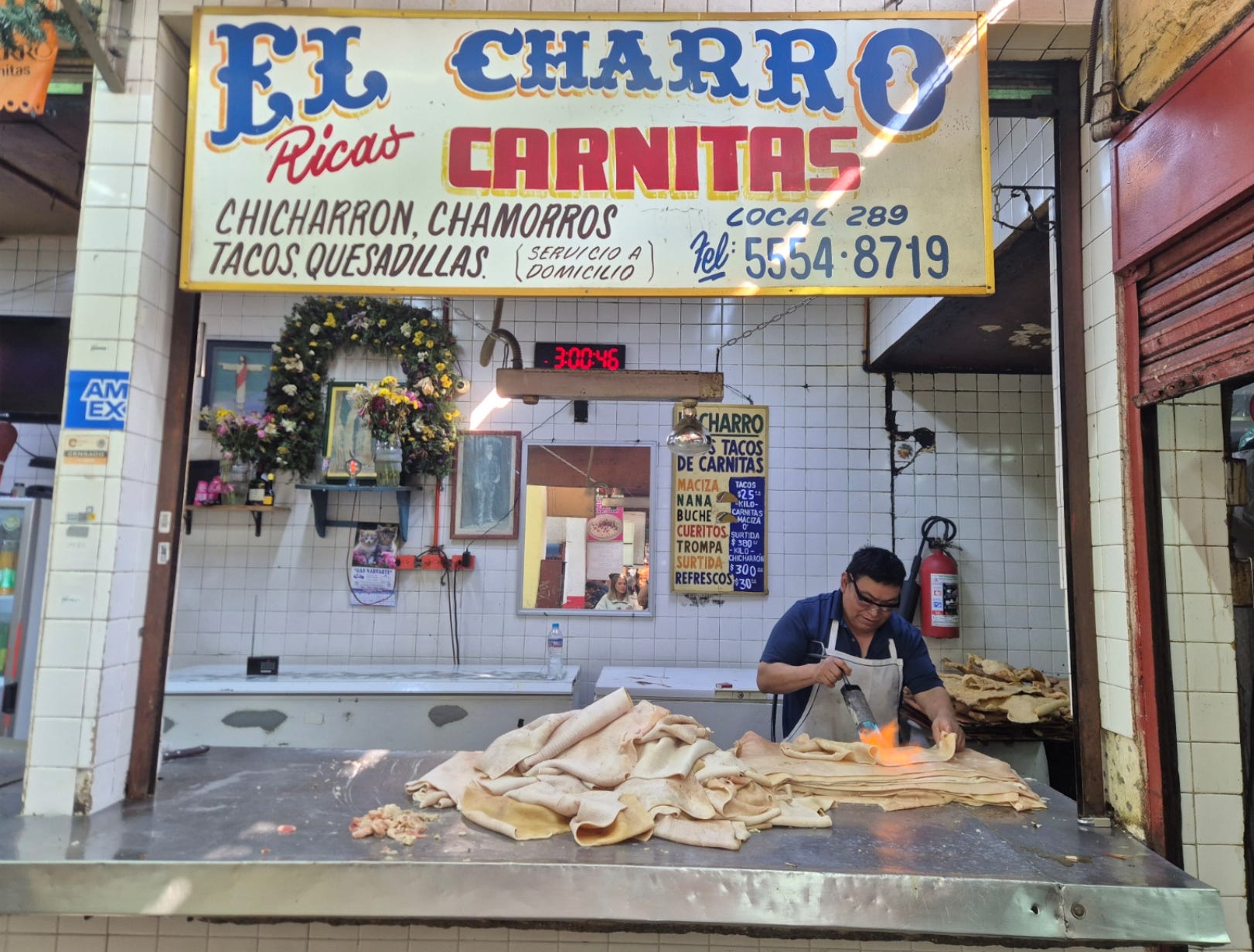
Menudo, or Mexican tripe soup, is probably the single most underrated Mexican dish. A dish that binds Mexicans and Georgians, who have xashi (which I make and love). Interesting that these dishes (also like pho) are universally breakfast dishes. And hangover dishes! An odd global convergence. Why can’t these be evening dishes like other soups?
Clamato is such a bizarre concept. Who first thought to combine clam with tomato juice into a mixer? Powerful.
The Mexicans are right to put chili sauce on fruit and salt into beer.
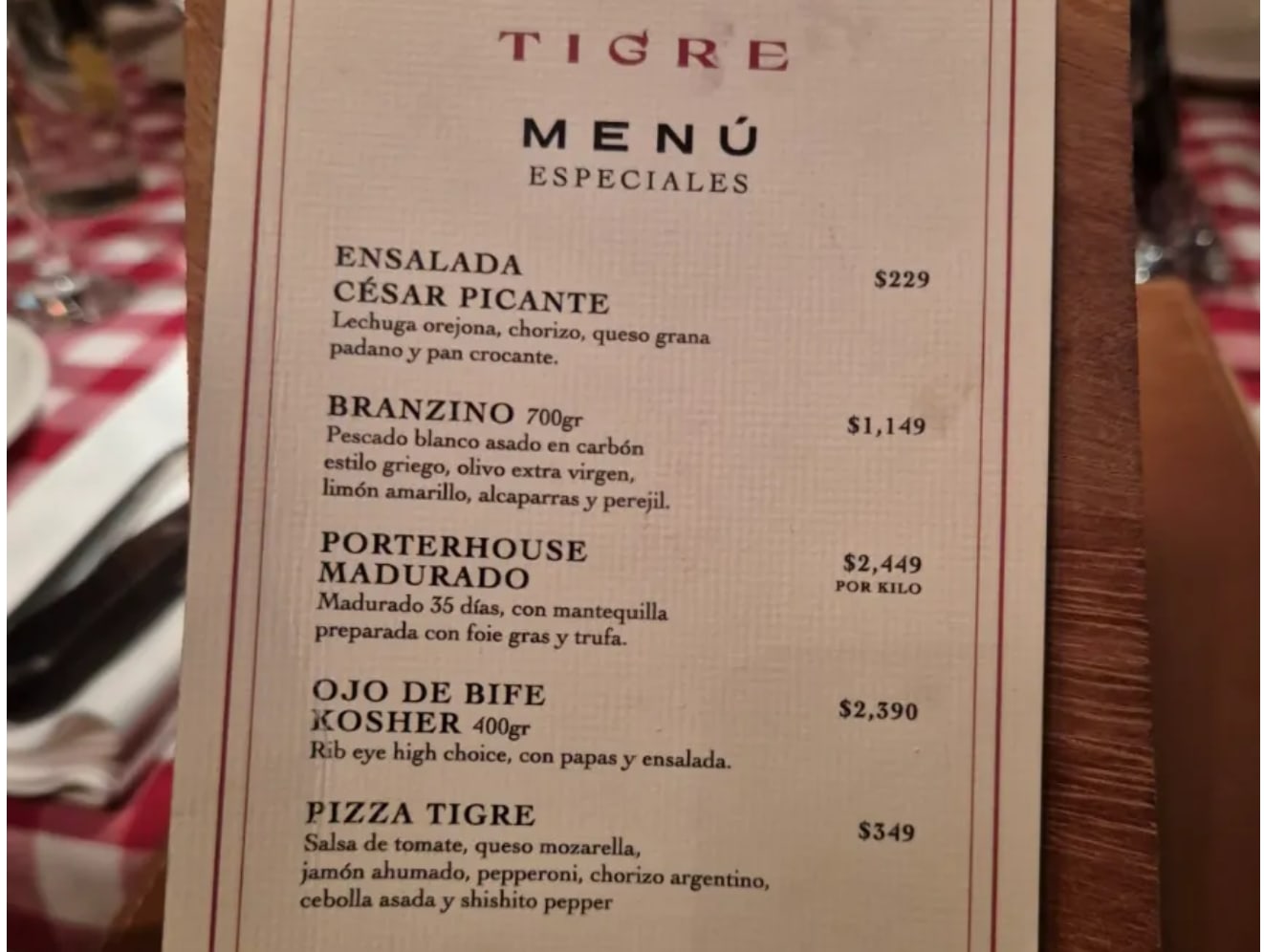
There is this funny phenomenon where at high end restaurants and steak houses there will be a cut of meat labelled KOSHER. It’s much more expensive than the other cuts. It shows how integrated Jewish sensibilities are with elite Mexican culture in Mexico City. This cut of meat is obviously not kosher in any meaningful way. It may be purchased from a kosher butcher, but it is not served in a kosher kitchen from a certified vendor. It signals elite status. It’s fundamentally idiotic, as it serves no religious purpose and is almost certainly a worse culinary experience for a much higher price. A pure example of conspicuous consumption in dining.
Mexican goods and services are high variability. They match the social structure. Food ranges from street vendors to high end super markets, fancier than any in Australia. Same with medical services: you can have top-tier health services on demand, but it will cost you. For everyone else there’s a dog’s breakfast public health service. Australia tends to have a far narrower band of ‘fine to good’ outcomes. Apt for a nation where mediocrity is a virtue.
My Spanish sucks. It used to be comfortably conversational. It’s decayed over a decade to loser gringo status. Upsetting! I can feel the plasticity declining.
Mexicans don’t wear shorts. Granted it’s winter. But it’s been hot. I’ve been in shorts and I’ve been the only one, unless I go to gringo areas. It’s a broader cultural thing. Coastal cities wear more shorts. Australia is all coastal cities.
On 2 January I experienced my first earthquake. 6.5 magnitude at its centre, weaker where I was in Mexico City. All our phones went off with a warning. I think I heard a window rattle. Powerful.
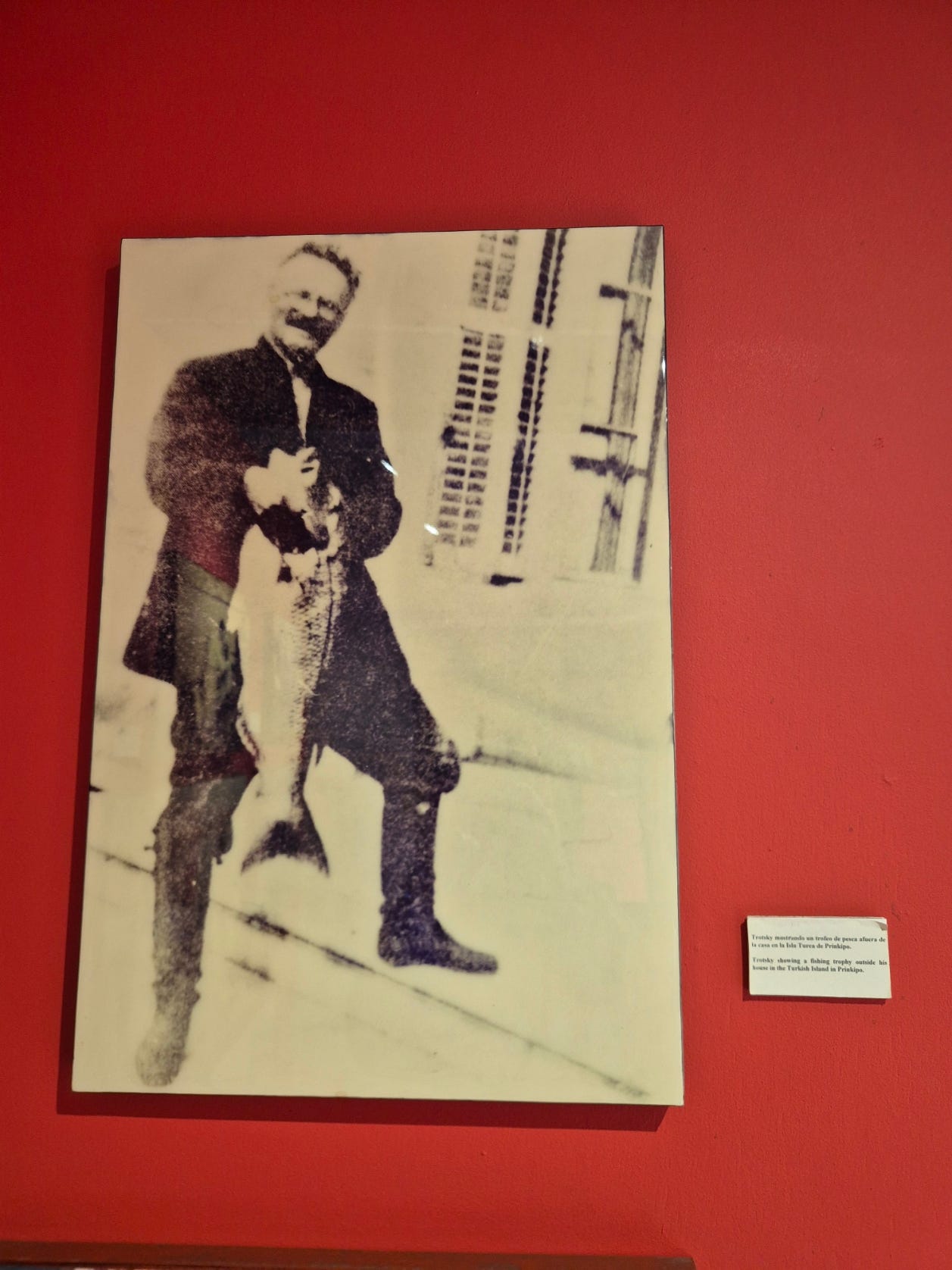
Trotsky was a Tinder-fish-profile-pic bro:
Am in Mexico now too, will write my thoughts up in the coming days once back. Happy new year!
Wonderful post!
I learned so much!
Re: Lebanese businessmen in South America, Africa: 'World on Fire', Amy Chua [she's the Yale Law professor who mentored J.D. Vance}
Oops, I forgot Carlos Slim!