Part 2: The Māori
Part 3: Colonisation & Settlement
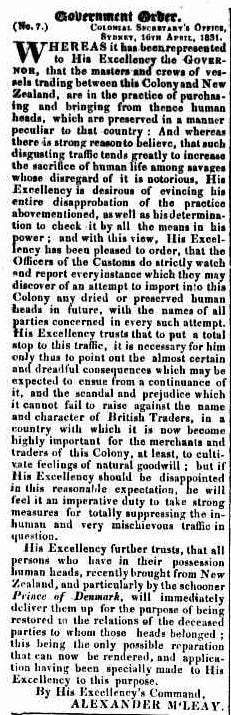
“In some instances by the late 1820s, Māori used the smoked heads of slain enemies to trade for further muskets… [M]uch of the agricultural labour was undertaken by slaves. By the early 1830s, too, some slaves were being tattooed and killed specifically for the trade in smoked heads…”
— Fairness and Freedom by David Hackett Fischer
“[T]his here harpooneer I have been tellin’ you of has just arrived from the South Seas, where he bought up a lot of ‘balmed New Zealand heads (great curios, you know), and he’s sold all on ‘em but one…”
“For all his tattooings he was on the whole a clean, comely looking cannibal.”
— Moby Dick
The British were not the first people to settle New Zealand.
Auckland today is the largest Polynesian city in the world. In New Zealand there is a Māori term for European descendant New Zealanders — ‘Pākehā’. New Zealand may be the only settler society in the world where whites go by the name given to them by the natives. Perhaps it is less ubiquitous in practice than it is in history books. But to even have such a word in the public discourse is unthinkable in Australia or the US.
New Zealand’s almost million Māori are descended from around 70 women who arrived 30 generations ago. They emerged from the Pacific Islands where they had a long seafaring tradition. They are believed to have even canoed to the Americas where they may have introduced the coconut and from whence they brought back the sweet potato. Such long voyages selected for larger, more muscular bodies, which had an advantage in maintaining body temperatures at sea.
So contiguous are the Māori with their Pacific Island forebears that when Captain Cook first landed in New Zealand with his famous Tahitian priest-navigator Tupaia — around 500 years after Māori first arrival — they were able to converse. The Māori were split into tribes but shared a language and a martial culture. Europeans found much to admire in their martial spirit, even if the Māori tendency to eat their rivals horrified them. The Māori regarded Cook as having aristocratic qualities, and in turn Cook thought them “of a Brave, Noble, Open and benevolent disposition”.
The first Europeans to find New Zealand, Dutch explorers under the command of Abel Tasman in 1642, were attacked and killed by the local Māori. The Dutch called the place Murderers Bay. On the same journey Tasman discovered Tasmania (calling it Van Diemen’s Land).
In 1772 when the French navigator Marc-Joseph Marion du Fresne landed in the Bay of Islands, the Māori killed and ate him and two dozen of his men. A year later around ten British sailors from the HMS Adventure — Cook’s second voyage to New Zealand — were found butchered and prepared for a meal in Queen Charlotte Sound.
On the same voyage with Cook, Tupaia was unable to converse with the natives of Australia. These natives appeared as distant to Tupaia’s people as they did to the Europeans. That is because they were. Arriving some tens of thousands of years ago across Eurasian land bridges that had since been swallowed by the sea, they dispersed over time across a vast continent, splitting into further branches of men. The reddish Tasmanians were distinct again by virtue of their own separation from the mainland as the Bass Strait swallowed the connecting land. Accordingly, the Australian natives did not share a common tongue and their customs varied significantly region to region.
Australia was a land not mainly of birds like New Zealand, but also of large mammals and reptiles and marsupials, many of which were hunted by these men to extinction. In 1688, the first Englishman to set foot on Australia called them “the miserablest people in the world”. (Although Arthur Phillip, the head of the First Fleet and first governor of New South Wales, did name Sydney’s northern prominent “Manly” after the handsome native gentlemen he encountered there.) Tupaia the Tahitian shared this sentiment, the shape and manners of these people neither legible nor impressive to him. One suspects that the natives in Australia were fortunate that the warrior sea peoples across the Tasman never made it over, although the Australian Aborigines did have projectile weapons in their arsenal — the boomerang and throwing spear — whereas the Māori did not (until the musket arrived with the British). One reason Britain chose to dump its convicts in New South Wales and not New Zealand was because they judged these natives to be more benign.
In time, the Māori assumed their place in New Zealand’s national fabric through sheer weight of numbers and blood, waging a series of wars in the 19th century that demanded the deployment of thousands of ‘lobsterbacks’ from Britain. New Zealand’s smaller scale, Māori demographic concentration, a largely shared language and extensive cross-tribal networks allowed for large coalitions. Australia’s Aborigines were too fragmented and spread out to appear too menacing to the British. Māori tribes were conceived as branches of a shared genealogy, tracing descent from common ancestors who arrived in New Zealand on a handful of founding canoes — kin-groups within wider confederations rather than discrete peoples. Aboriginal Australians, by contrast, spoke hundreds of mutually unintelligible languages and functioned as separate nations across the continent, with no unifying origin narrative binding them.
This difference had political consequences. Australia had nothing comparable to the Treaty of Waitangi in 1840, for which the Crown sent a representative and which more than 500 Māori chieftains signed over nine months, amidst much confusion. Whilst prominent in New Zealand mythology and self-conception, the treaty was questionable in its meaning and efficacy and continues to morph in New Zealand’s political and cultural lore. Who would the governor of New South Wales even have made such a treaty with? The Australian colonies themselves were not united until Federation more than half a century later, and their indigenous peoples were too different and too widely dispersed across a vast, tough continent to unite in the same way. By contrast, in 1858 Māori appointed a king — a deliberate parallel authority to the British monarch, intended to consolidate Māori sovereignty against Crown encroachment. Australian sparseness of habitation led the British to consider it unsettled. There was some dodgy Australian ‘treaty’-making — most infamously in the case of John Batman, who traded scissors, flour and other goods for around 600,000 acres of land in Victoria in an attempt to circumvent Crown authority and establish a private claim. But no continent-wide indigenous authority or coalition emerged with which the Crown felt obliged to bargain. Aboriginal Australians instead succumbed more devastatingly to disease, rapid pastoral expansion and sporadic conflicts with settlers than to the resolute arm of the state, which largely assumed their eventual extinction — as it also, wrongly, assumed that Māori would disappear.
The Māori thought of themselves not too dissimilarly to the British: a seafaring warrior immigrant people. They did not consider the arrival of others as fundamentally illegitimate and as alien as the British appeared to the Australian Aborigines. As powerful seafaring and martial peoples, born of island nations, it is not surprising that the Māori and British shared much mutual admiration from the start despite their many differences.
Māori began the long tradition of work travel in the 1790s as they joined the whaling crews travelling through Sydney as excellent seafarers. Moby Dick’s Queequeg was based on a Māori seaman Melville met.
The greatest immediate impact on the Māori by British settlement was the introduction of the musket. Just like the introduction of the horse in the Americas gave rise to the Comanche empire and others that annihilated neighbouring peoples, so the muskets created a brief if overwhelming advantage to certain Māori tribes, resulting in the Musket Wars (1806 — 1845). The Māori Musket Wars devastated local populations, killing at least 20,000 Māori over thirty years. Together with venereal disease and localised epidemics, they cut the Māori population from around 100,000 at Cook's arrival to around 70,000 by 1840. Michael King in The Penguin History of New Zealand writes:
Many hundreds of men, women and children were killed, and many more enslaved. Some small tribes were all but wiped out, with only one or two families surviving the fighting and its aftermath of executions.
Some of these actions involved considerable cruelty. In the wake of battles, for example, the captured killers of warriors might be turned over to the widows of the men they had slain… The resulting deaths were prolonged and painful. At Waitangi Beach on Chatham Island, the Ngāti Wai hapu of Ngāti Mutunga laid Moriori women staked to the ground alongside one another and left them to die slowly.
The arrival of Europeans was far less calamitous to the Māori than it was to American natives or to the Australian Aborigines. Disease was the great harbinger of death in both places. Millions of native Americans — 70 to 90% — were killed by new diseases like smallpox. Around 80% of Australian Aborigines are estimated to have died soon after white settlement. The great epidemics arrived in New Zealand decades after Europeans did. Why the delay? Before 1840, Māori were dispersed at low density and European contact was confined to a few coastal ports. The Treaty changed that by opening the floodgates to mass British immigration. European diseases were also less devastating to the Māori when they did arrive. Why? First, timing. Vaccinations were invented in 1796, and missionaries and administrators did their best to inoculate Māori. Too late, however, for American and Australian natives. Second, more speculatively, the Māori were isolated from global populations for far less time than native Americans and native Australians. The former arrived over the Eurasian land bridge some 15,000 years ago, while the native Australians had tens of thousands of years in isolation. The Māori were isolated for only a few hundred years, and so may have been less vulnerable to a range of the diseases brought by the Europeans.
The story of native American people plucks elements of both. Native American tribes varied greatly across the vast continent and were often unintelligible and brutal to each other. The peaceful peoples suffered most, while the most fearsome like the Comanche and Lakota controlled vast territories for well over a century. Ultimately destroyed by advances in settler weaponry and the destruction of the bison on which they relied, and cheated out of countless treaties, they were ultimately reduced and subsumed into the American behemoth.
Australian Aborigines tended to be brutalised by lawmen and settlers in gangs and raiding parties. The Māori fought two wars against the British. And whilst there were brutal acts and sadists on both sides, the fighting was more or less ‘clean’ in the way of war and filled with mutual respect. In the case of one British sadist, a Captain Lloyd, who was caught and had his head baked in the tradition of the Māori, writes Fischer:
[t]his episode was regarded by General James Alexander as a lamentable lapse of British leadership and a splendid feat of soldiering by his Māori opponents.
Māori martial culture could be quite colourful. “Excrement eater” was a self-acclaimed title — a warrior who would gobble up the whole of his enemies, including his excrement. “It is better to fight and die like a shark than an octopus,” a Māori saying goes. Better predator than prey.
The Māori gained considerable political leverage early on. Before 1867, New Zealand ran a colour-blind franchise that in practice locked Māori out: you needed individual property title to vote, and Māori land was communal, so despite comprising a meaningful part of the population they had almost no say in parliament. The Māori Representation Act 1867 was the settler state’s workaround: it created four dedicated Māori electorates and let Māori men over 21 vote in them regardless of land title, with the first MPs elected in 1868. It was a political pressure-release valve in the context of the wars with the Māori at the time. It was sold as enlightened inclusion and officially designed as a five-year stopgap, but it also neatly capped Māori power at four seats no matter how many Māori there were, which is why it was easy to extend in 1872 and make permanent in 1876. The basic structure survives: the old four seats lasted until proportionality was introduced in 1996, and today there are seven Māori electorates whose number rises or falls with how many Māori voters choose the Māori roll. Despite these limitations, Māori men over 21 received the vote in 1867 — twelve years before non-Māori men in New Zealand, who had to wait for the abolition of the property qualification in 1879. So it remains a serious reflection of the accommodation and liberalness of the British of the time, as well as the hard-fought gains of the Māori through the wars of the period.
New Zealand fielded Māori battalions in WWI and WWII. A Māori pilot was first to shoot down a Japanese plane over Singapore. Australia had no equivalent, mostly (although not entirely) barring Aborigines from service.
After WWII, the Māori began a process of urbanisation, creating new opportunities for their communities and increasingly mixing New Zealand’s ethnically parallel societies. Such a convergence has not happened in Australia. Partly this is due to the Māori’s far greater proportional population, but also to Australia’s misguided policy of subsidising desolate remote communities where they are barred from owning private property.